

Estimated reading time: 5 minutes
Ingrown hairs can be itchy, painful and, frankly, look pretty awful. And they’re tricky to get rid of. Ingrowns form when a hair grows into the skin. You may or may not be able to see the hair trapped inside these bumps. Some of them could also become infected.
The main parts of the body where these are likely to occur include the beard area of the face (neck, cheeks and chin), legs, armpits and pubic area (bikini line and inner thighs). Pseudofolliculitis barbae refers to a condition commonly found on the facial area as a result of shaving. (link to folliculitis post)
Understanding what causes ingrowns is essential for effective treatment and to prevent them from recurring.
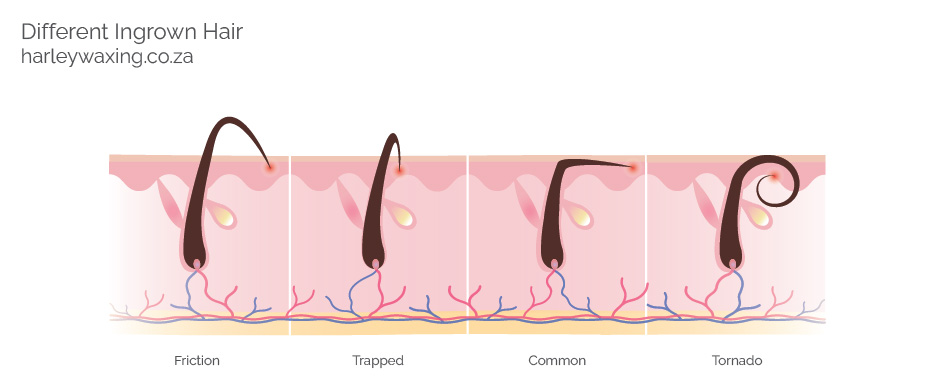
Types of Ingrown Hairs

- Friction ingrown hair: Friction causes the hair to grow back into the follicle.
- Trapped ingrown hair: Hair has been trapped in the follicle and no longer continues to grow.
- Common ingrown hair: Hair cannot exit the follicle and continues to grow under the skin.
- Tornado ingrown hair: When hair cannot exit the follicle, it can turn back and continue to grow in a spiral motion.
Causes
- Anyone who shaves, tweezes, or waxes runs the risk of developing ingrown hairs. Blunt razor blades don’t cut the hair off neatly, and low-quality wax can break off hair just below the surface instead of completely removing it from the follicle.
- When a hair penetrates the skin, instead of growing out of the follicle as it should, it triggers a foreign body response. In turn, this inflammation causes pain, redness and itching.
- Hair structure and genetics can play a part here, as coarse or curly hair is more likely to turn back on itself or grow into the skin. Specifically, shaving this type of hair too close to the skin creates a sharp edge that can cut into the skin. In cases like these, waxing can definitely be a better option.
- Neglecting exfoliation and moisturising the skin is a good way to ensure you get ingrown hairs. Dehydrated skin that is not being exfoliated tightens up its pores, and dead skin cells accumulate to form a keratin plug, blocking the hair’s way out.
- Tight clothing rubbing over the skin can also cause inflammation, which can lead to bumps forming on the skin.
Symptoms
- Hair that looks like a loop, or is growing straight under the skin
- Skin irritation and inflammation
- Pain
- Itching
- Small, pus-filled bumps called papules with hairs in the middle (the body’s way of creating pressure to push hair out, but it doesn’t always work)
- Discolouration (red, brown or purple spots)
- Swollen, infected follicles with pus formation
- Hyperpigmentation and scarring (when they’ve been picked or scratched at)
Treatment
Although ingrown hairs usually resolve on their own within a week or two, they can still be bothersome. There are a few solutions to help get rid of them sooner and prevent them from coming back.
- Gentle exfoliation removes dead skin cells to clear out blocked pores and give hair a way out.
- A warm compress applied for 10-15 min several times a day softens the skin and opens pores to let the trapped hair surface. When you can see the hair, it may be released from the skin using a sterile needle or tweezers. Only release the trapped end of the hair; don’t pull it out. Never break the skin to remove an ingrown hair – if it’s not surfacing by itself, leave it alone.
- Do not pick, squeeze or scratch at ingrowns. It can result in an infection, which may then lead to scarring.
- If deep infection sets in, see a doctor. They may have to drain it and/or prescribe antibiotics.
- Tea Tree Oil is an antimicrobial, healing essential oil that is great for alleviating ingrown hairs. Always dilute essential oils in a carrier at a ratio of 1:10.
Prevent Ingrown Hairs
Healthy skin is the least likely to develop ingrown hairs, so following a good skincare and hair removal routine is crucial.
- Always dry off and cleanse skin thoroughly after sweating.
- When shaving, use a sharp blade and shaving cream or gel, rinse the blade often and shave in the direction of hair growth.
- It is best to have waxing done by a professional therapist who uses good-quality products that will remove hair cleanly from the root while remaining gentle on the skin. Proper pre- and post-waxing procedures keep skin healthy. Harley Pre- and Post Waxing products are designed to prepare the skin for waxing and ease discomfort and irritation afterwards. Exfoliate skin 24 to 48 hours before waxing and continue this 2 to 3 times per week to maintain clear skin. Maintain a consistent waxing schedule, and do not shave inbetween sessions. Consistent waxing weakens the hair roots over time, minimising regrowth.
- Gentle exfoliation removes dead skin cells to prevent keratin plugs from forming and blocking pores. Mechanical exfoliants contain microbeads to polish the skin, while chemical exfoliants like Salicylic and Lactic acids are mild keratolytic agents that dissolve bonds between dead skin cells, removing them from the skin’s surface. Harley Waxing Ingrown Hair Solution exfoliates, calms inflammation and disinfects skin after waxing, and Aloe Soothing Gel soothes and repairs.
- Dehydrated skin can become tight, so a two-pronged approach works best. Moisturise after exfoliation using a non-comedogenic lotion that won’t clog pores.
Conclusion
Even though ingrown hairs are annoying and unsightly, they can be managed effectively and prevented with a few simple routines.
While this should prevent most of them, you might still get the occasional ingrown. In that case, using the treatment advice stipulated above will help to resolve them quickly and painlessly.